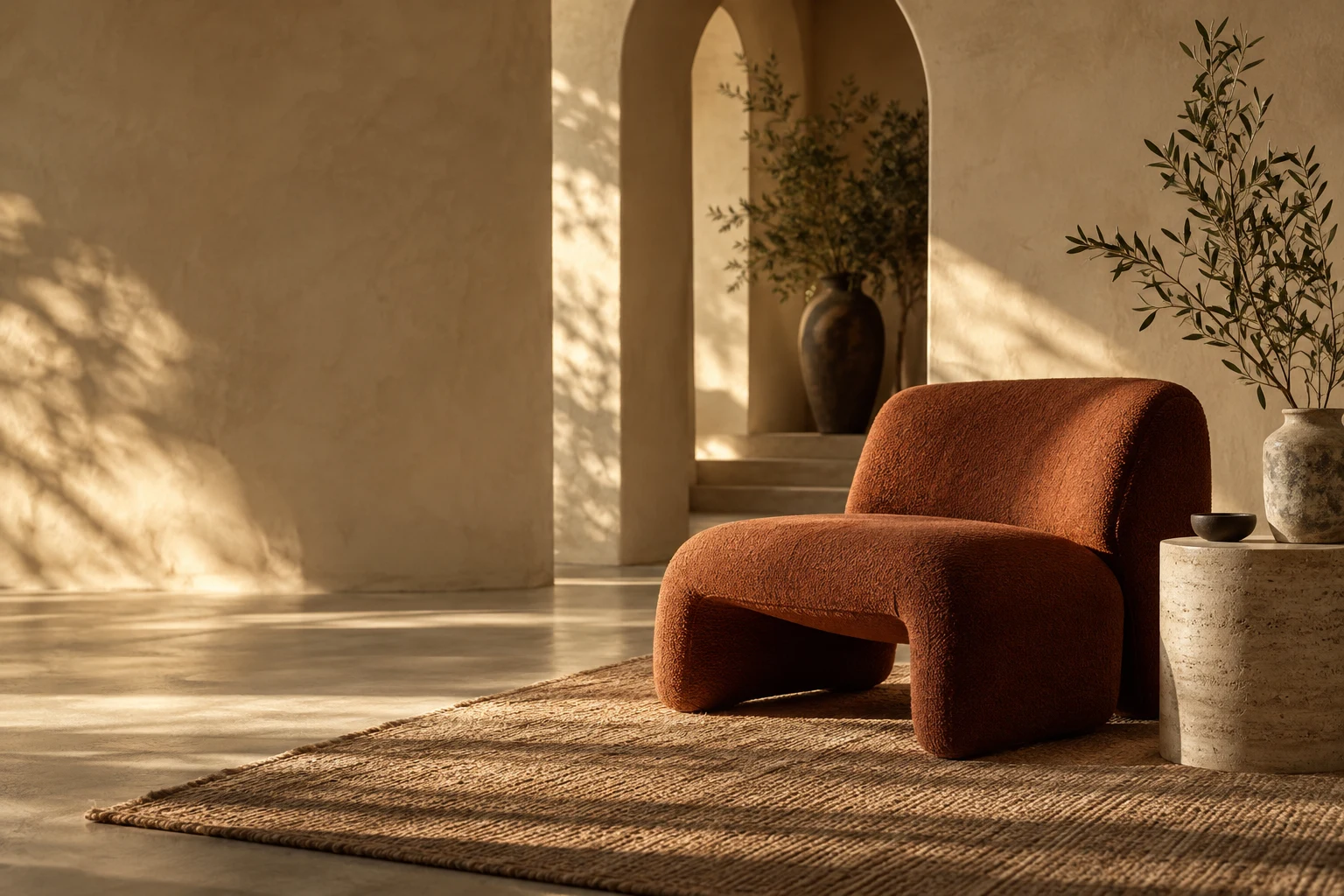
Begin with a moment, not a room
Think about the first ten minutes of your morning or the last half hour of your evening. Where do you sit? What do you reach for? The most useful starting point is often a small, repeated moment. A chair beside the window may matter more than another carefully filled shelf.
Choose one spot and spend a few days noticing it. Is the light comfortable? Is there somewhere to put a book? Does the arrangement let you move easily? Let these ordinary questions guide your choices.
Give each object a little room
Empty space makes a composition legible. A sculptural vase needs less company than you might think; a low bowl can balance a taller lamp without another object between them. Try taking one piece away before adding something new.
This is not a rule about owning fewer things. It is a way of letting the things you enjoy have a clearer presence. Keep practical items close and allow decorative pieces a little breathing room.
Repeat a feeling, not a set
Rooms feel connected when a colour or texture returns in small ways. Rust upholstery might find an echo in a terracotta bowl. A stone table can sit comfortably beside a ceramic lamp without matching it.
Begin with two or three related tones. Mix one smooth surface with something more tactile. The result should feel gathered over time, rather than chosen in a single afternoon.
Leave room for change
Move a chair as the seasons change. Bring a favourite object to the table for a week. Let your room respond to daylight and to the things you are doing. A considered home is not static; it makes ordinary days a little easier.
A useful exercise: choose one corner, remove everything that does not serve it, and return only what you miss. Sit there before deciding what comes next.