Start with what is already there
Look at the largest surfaces first: the floor, a wall, the sofa. Notice whether they are smooth, grainy, soft or reflective. These existing textures are your starting palette, even when you have never thought of them that way.
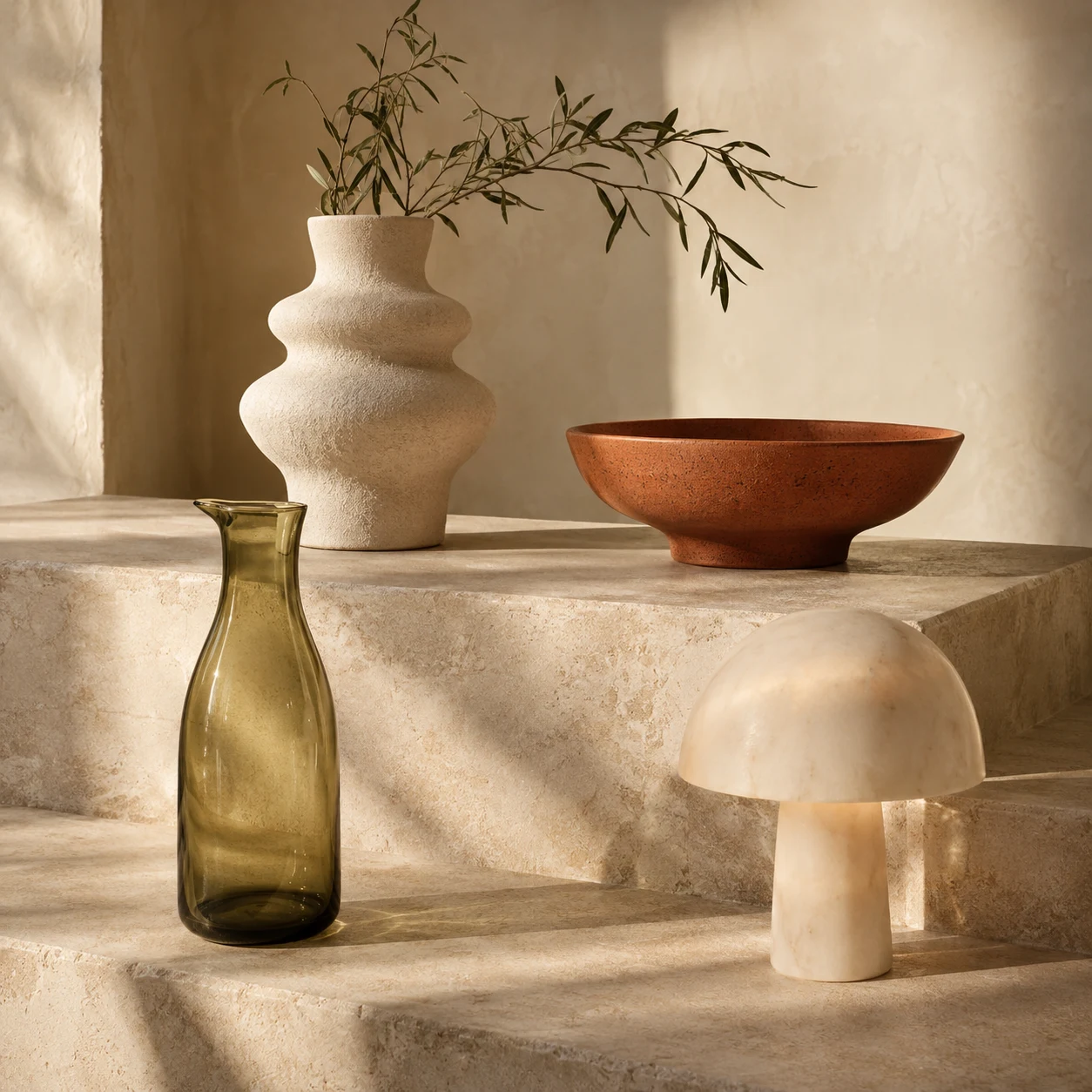
If the room is mostly smooth, a textured ceramic object can add depth. If it already contains strong grain or pattern, a simple glass form offers a quieter counterpoint.
Pair opposites gently
Soft upholstery beside cool stone creates contrast without a loud colour. Tinted glass catches light differently from matte stoneware. Each material makes the other easier to notice.
Choose two contrasting surfaces and keep one element consistent: a warm undertone, a rounded shape, or a similar scale. That shared quality helps the arrangement feel intentional.
Let daylight do some work
A material is never quite the same at breakfast and at dusk. Side light reveals the texture of a ceramic surface; backlight gives coloured glass a different presence. Try an object in more than one position before deciding where it belongs.
Leave a safe distance from edges and heat sources. Consider glare, stability and how often the surface will need cleaning, as well as the way it looks.
Balance the useful and the beautiful
The best surface for a busy table may be different from one chosen for a quiet shelf. Think about spills, handling and everyday care before committing to a finish. Beauty becomes more satisfying when the object works with your habits.
Build slowly: a tactile centrepiece, a little reflected light, a soft place to sit. You do not need every material in one room. Two or three carefully chosen contrasts are enough to begin.